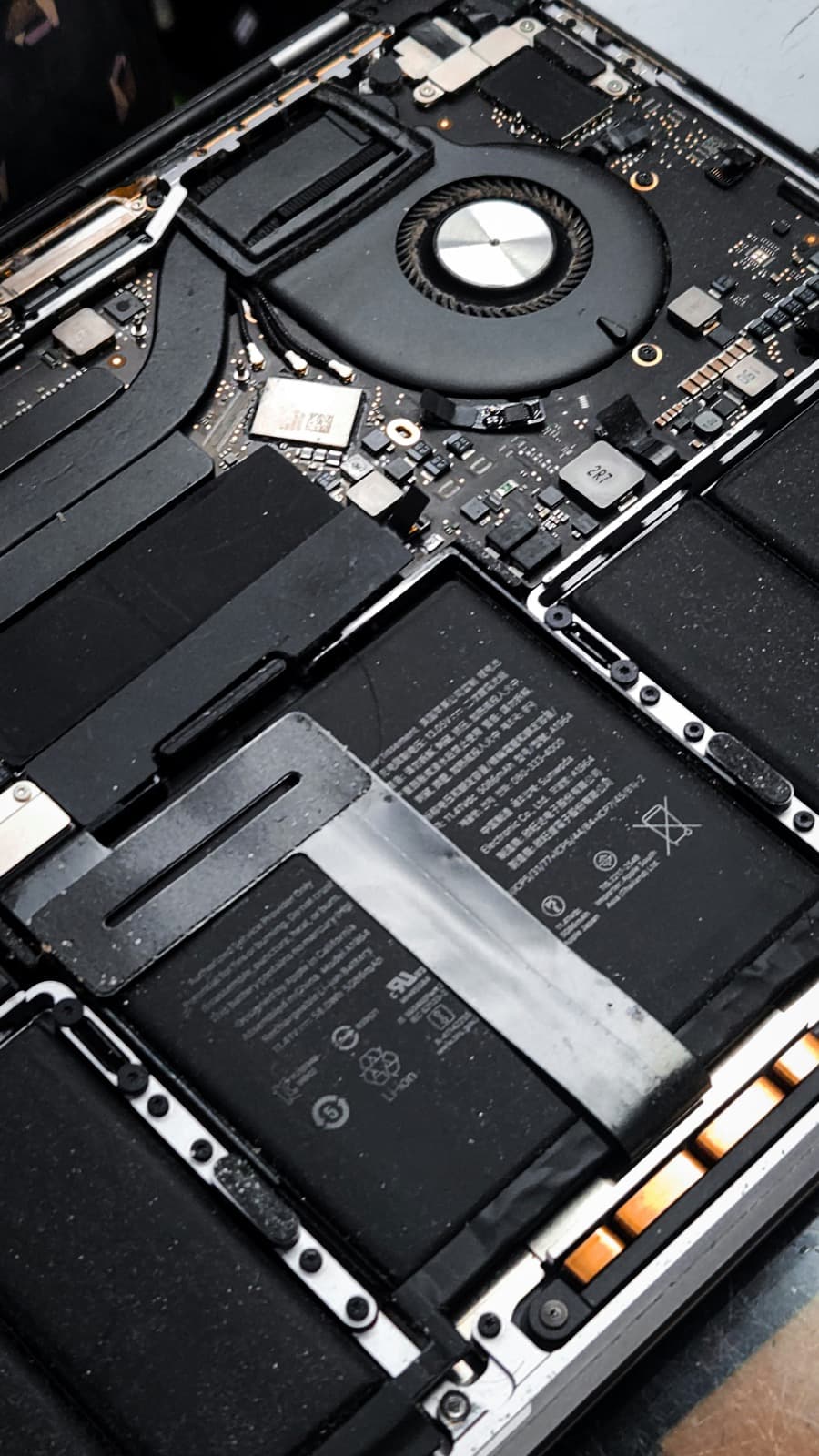
Desktop Macs fail differently from laptops, so the diagnosis looks different too. There is no battery to blame and nothing gets dropped or spilled on in a rucksack; instead the usual suspects are storage, heat and dust, and age. The single most common iMac fault we are called to is a machine that has become unusably slow or will not boot past the Apple logo, and the cause is very often a mechanical hard drive that is on its way out. The diagnosis is free and happens at your desk.
If your iMac has a Fusion Drive, that is worth understanding, because it explains a lot of otherwise baffling behaviour. A Fusion Drive is a small SSD and a spinning hard disk stitched together by macOS to look like one volume — and when the hard-disk half starts failing, the whole volume becomes unreliable even though the SSD part is perfectly healthy. Machines like this often limp along for months, freezing and beachballing, before they stop booting entirely. Replacing the mechanical half with an SSD and moving your data across usually transforms the machine, and it costs a fraction of a replacement.
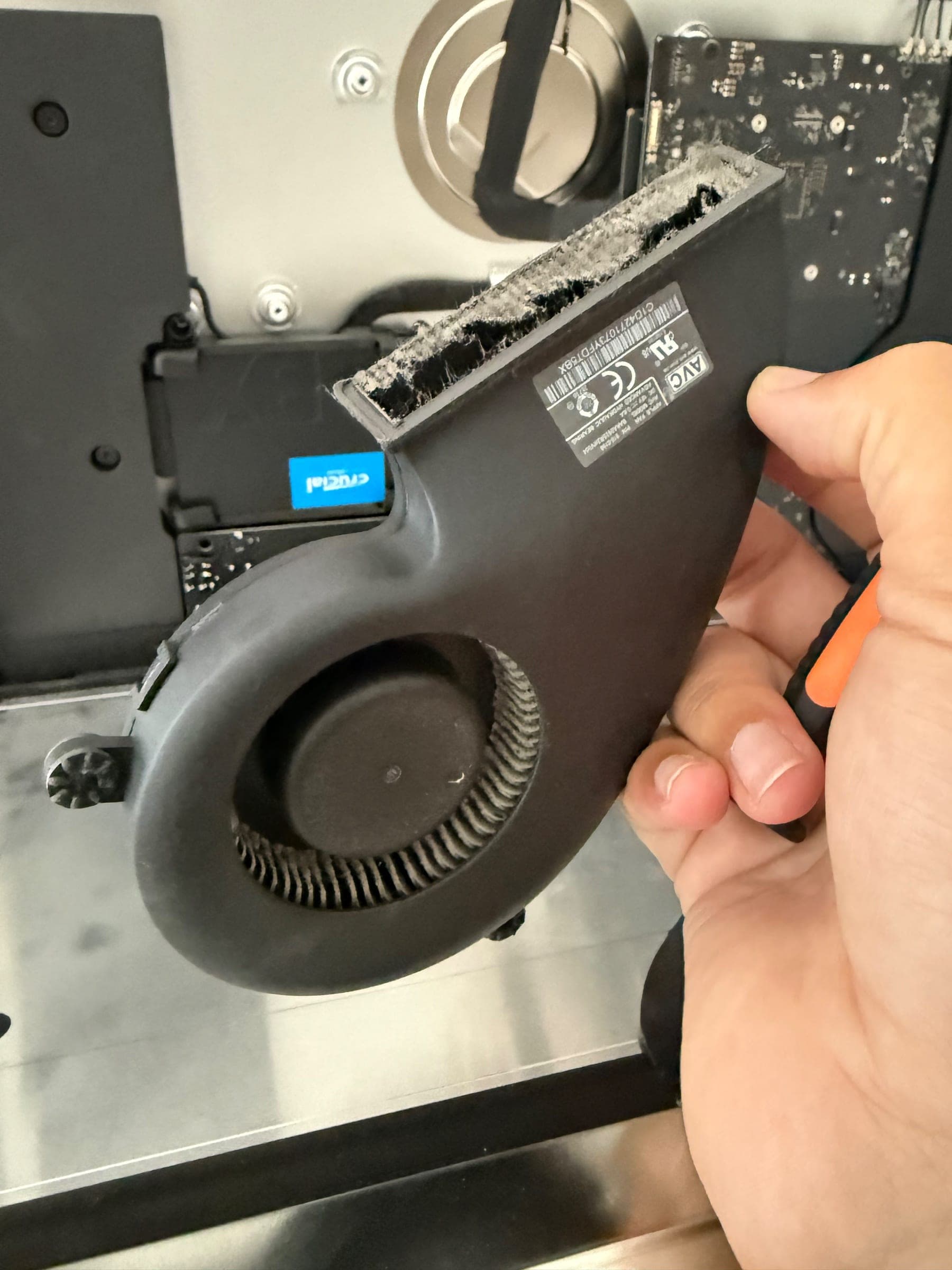
Dust and heat are the other big one, and they build up quietly over years. An iMac pulls air through a narrow vent and eventually the internal fan and heatsink clog, at which point it gets loud, gets hot, and throttles itself slow. A full internal clean and fresh thermal paste brings a surprising amount of performance back on an older machine. Software work, RAM upgrades on the models with an accessible hatch, macOS reinstalls and new-machine setup are also done on-site while you watch.
One thing we will always be straight about: anything that means opening the display. From 2012 onwards the screen is glued to the chassis with adhesive strips rather than screwed on, so opening one properly is a workshop job with the right tools and fresh adhesive — not something to attempt on a kitchen table. Display panels themselves are expensive, and on an older iMac the honest answer is sometimes that the screen costs more than the machine is worth. We will tell you that rather than quote you for it. Every repair carries our 90-day parts-and-labour warranty, there is no callout charge, and nothing to pay if we cannot fix it.