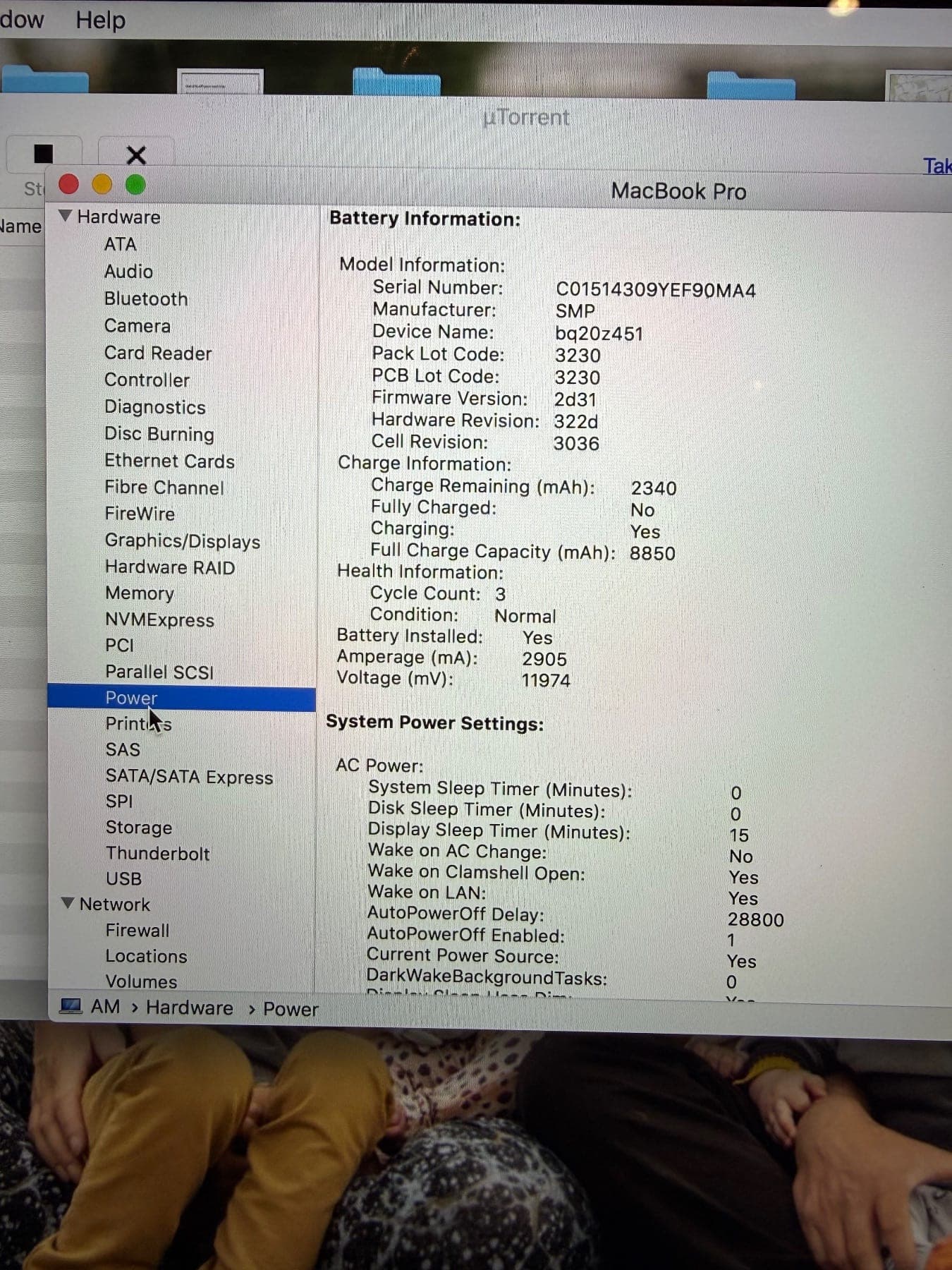
Before replacing anything we check whether the battery is genuinely the problem, because fast drain has three common causes and only one of them is a worn cell. macOS reports cycle count, current maximum capacity and condition, and that tells us most of what we need. Sometimes the cell is fine and the charging circuit is no longer negotiating power properly; sometimes it is software holding the machine awake so it drains overnight while the lid is shut. We measure rather than assume, and the diagnosis is free.
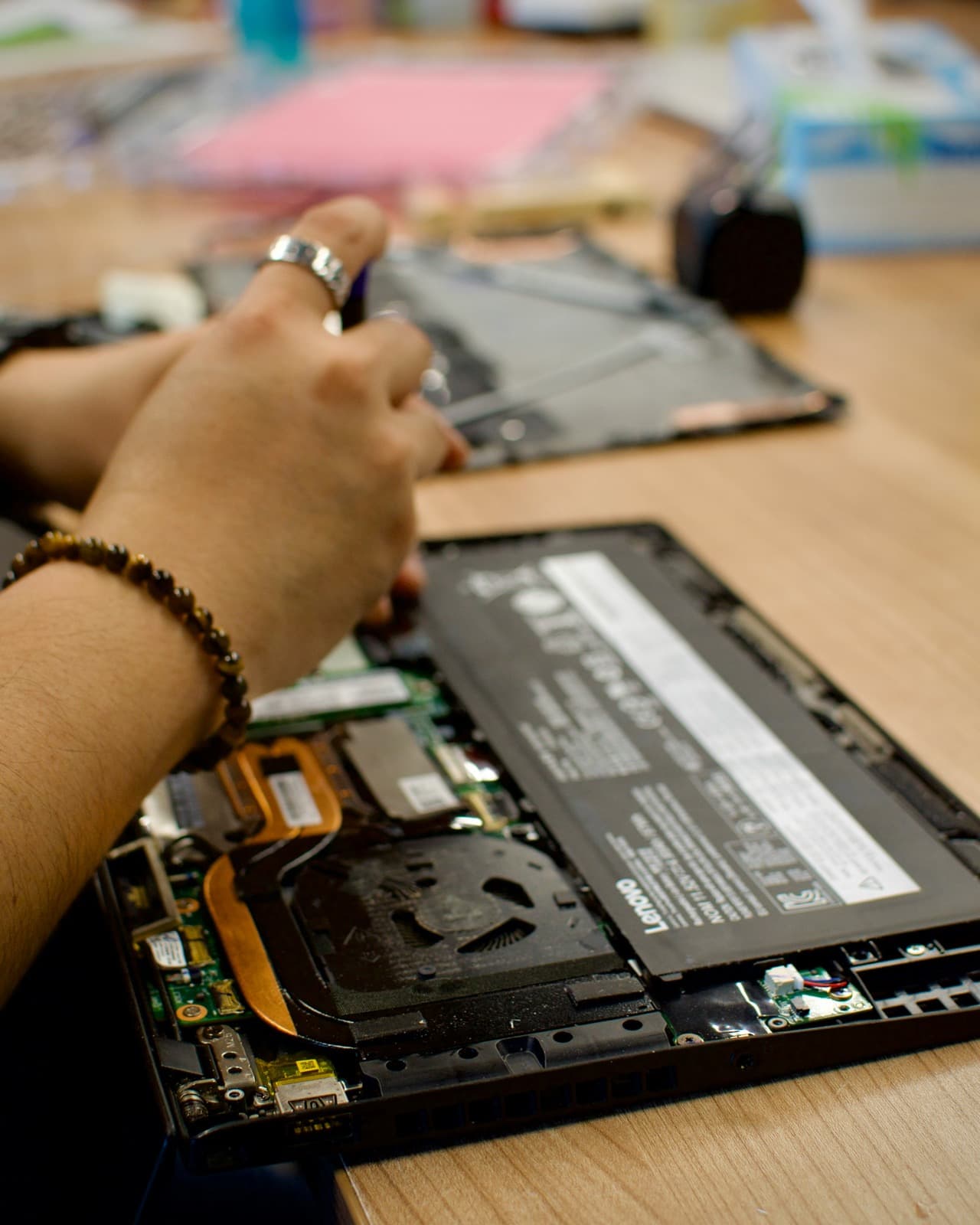
When the battery is the answer, this is one of the most satisfying repairs we do — a MacBook that has been tethered to a wall socket for months goes back to a full day of real use. Most battery replacements are completed at your home or office while you wait, and we bring genuine-specification cells rather than the cheapest thing available, because a bargain battery that fails in eight months is not a saving.
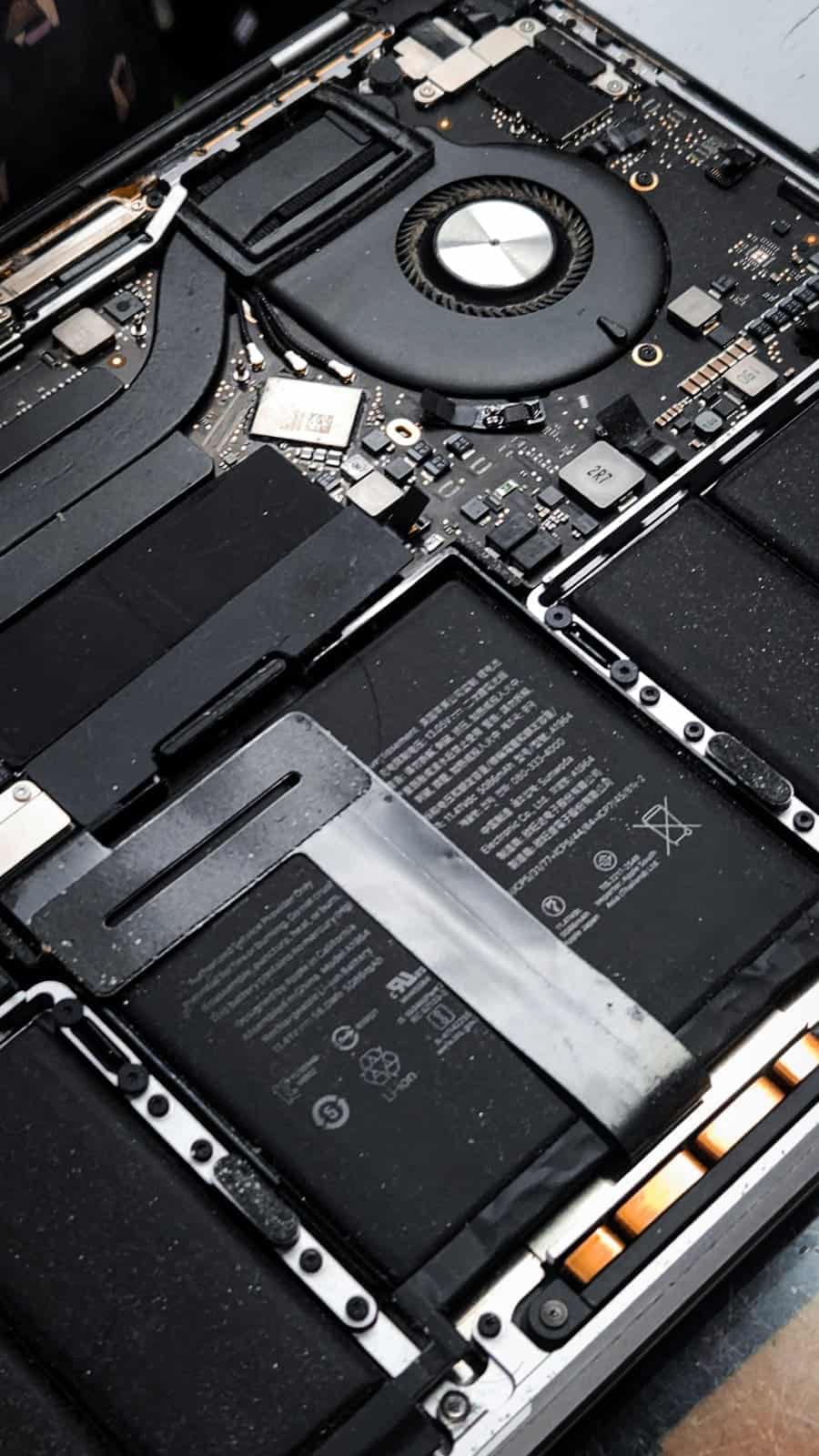
A swollen battery is different, and it is the one fault we would ask you to treat as urgent. If the trackpad has started to lift, the case no longer sits flat, or the bottom panel is visibly bowed, stop charging the Mac and call us the same day. A swelling cell is a genuine fire and rupture risk, and it will eventually damage the trackpad and case around it — a cheap repair becomes an expensive one by waiting.
On price, the honest answer is that it depends on the model, and the spread is narrower than people expect. A MacBook Air cell is the cheapest of the range; a 13-inch Pro sits a little above it; the 15 and 16-inch Pro batteries are physically much larger and cost accordingly. Where Apple differs from us is not usually the battery itself but what goes with it — on many models Apple replaces the whole top case, taking the keyboard and trackpad with it, which is why an out-of-warranty quote can land two or three times higher than the cell alone warrants. We replace the battery. You get the figure for your exact model before anything is opened.
You can check whether you actually need one before calling. Hold Option and click the Apple menu, then System Information, then Power — that shows cycle count and condition. Apple rates most modern MacBook batteries for 1,000 cycles, so a machine at 300 cycles reporting poor health has a different problem from one at 1,100 that is simply worn out. macOS also flags "Service Recommended" or "Replace Soon" in Battery settings, and that flag is reliable enough to act on. If your numbers look healthy and the Mac still dies at lunchtime, tell us — that points at software or a power-management fault, not the cell, and replacing the battery would not have fixed it.
Older machines are worth asking about rather than assuming. We still fit batteries to Intel MacBooks going back over a decade, and to the older unibody MacBook Pros where the cell is a simple screw-in job — often the cheapest repair in this whole list. On a machine that age the question is usually whether it is worth spending anything at all, and we will give you a straight view: a 2015 Pro with an SSD and a fresh battery is a perfectly good writing and email machine, while a 2012 that also needs a screen probably is not.
We quote the cell and the labour together before we start, your data is untouched throughout, and the replacement carries our 90-day parts-and-labour warranty. There is no callout charge anywhere in Greater London, and nothing to pay at all if we cannot fix it.